

Is Fiber Packaging Right for Your Product? 5 Questions to Ask
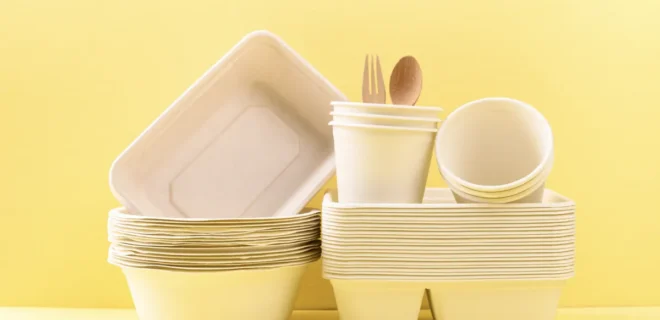
If you walked the floor at PACK EXPO this year, you saw it everywhere: molded fiber trays, paperboard containers and fiber-based alternatives to plastic. Brands want packaging that looks and feels more sustainable and retailers and consumers are asking for it.But fiber isn’t a drop-in replacement for every package. A container that works for dry baked goods might fail with a deli salad or a protein that needs weeks of shelf life. Before you switch, ask these five questions. Every food has a weak spot. Some need protection from moisture, some from grease and some from oxygen.On its own, fiber is porous. It absorbs liquid and oil and lets air pass through. That’s fine for dry or short-life items. However, for wet, oily, or oxygen-sensitive products, fiber usually needs help. That help comes as a barrier coating or a film lining.1. What does your product need protection from?
Ask: Is my product wet, fatty, or oxygen-sensitive? If so, what barrier will the fiber package need and how will that affect its sustainability? Shelf life is where many fiber projects succeed or stall. A sandwich that sells the same day has very different needs than a meat or cheese product that needs to stay fresh for weeks.If your product relies on modified atmosphere packaging (MAP) to extend shelf life, the package has to hold that gas mix. That usually means a lined tray and a well-matched lidding film. If your product goes through high pressure processing (HPP), fiber generally isn’t the right fit.2. How long does it need to last?
Ask: What shelf life do I need and has this fiber package been tested to deliver it with my product? A package can look perfect in a sample and still cause trouble in production. Fiber trays can behave differently than plastic ones. They may vary slightly in dimension, de-nest differently, and still need a sealable surface to bond with lidding film.If you use tray sealers-your tooling, sealing temperature, dwell time and film may all need adjustment. On a fiber tray, the lidding film’s sealant layer has to match the tray’s coating or lining. A mismatch can cause weak seals, leaks, or a lid that won’t peel cleanly. A good match seals in freshness, holds a MAP gas mix, keeps out moisture and oxygen and gives shoppers a clear view of the product. Film choice also affects how the package performs on a tray sealer and what you can say about its end of life. Teinnovations supplies lidding film, so we can match the film to your fiber tray, your product and your sealer. We can also test that the whole package works together before it reaches your line.3. Will it run on your line?
Ask: Has this package been trialed on my equipment, at my speeds, with my film? What changes might we need to make? This is the reason most brands look at fiber in the first place, so it deserves a close look. “Fiber” doesn’t automatically mean recyclable or compostable.Barrier coatings and film linings can affect whether a package can be recycled or composted. Compostability claims typically require certification and many consumers don’t have access to commercial composting. Rules on materials and labeling claims also vary by state and continue to change.4. What happens after it’s used?
Ask: What end-of-life claim can I honestly make for this package, and will it hold up for my customers and markets? Fiber packaging often costs more per unit than conventional plastic, but unit price is only part of the picture. Consider freight and storage space, line efficiency, scrap rates, any equipment changes and the cost of meeting a retailer requirement or reaching a new customer.5. What does it really cost?
Ask: What’s the total cost of switching-including setup, production and shelf life, compared with the value it creates for my brand?
Fiber packaging can be a smart move. It can also become an expensive lesson if the material doesn’t match the product, the process, or the line. The right answer comes from looking at the whole package together: container, film, and machine.That’s what we do at Teinnovations. From concept to commercialization, we help food producers evaluate packaging options, test what works, and build a solution that runs on their line.
Considering fiber? Let’s talk it through.
< Back To News